
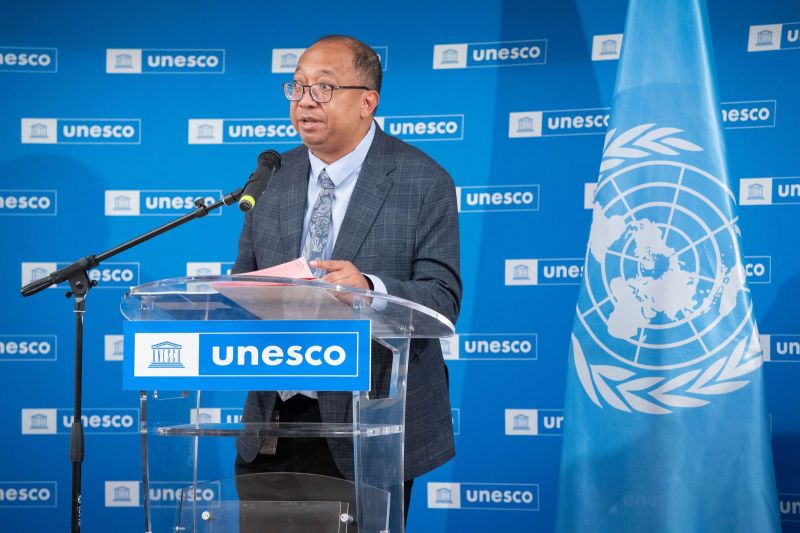
Jakarta, indomaritim.com – Indonesia’s Permanent Representative to UNESCO, Ambassador Satrya Wibawa, underscored the need to strengthen skills, enhance social protection, and ensure fairer access to opportunities for creative workers.
Antara News Agency said that Wibawa conveyed this statement at the launch of the global report “Skills and Employment in the Culture and Creative Industries: Strategic Frameworks and Promising Initiatives” in Paris, France, on Tuesday (June 9).
“Indonesia considers this discussion highly relevant and timely. The creative economy has become an important pillar of national development,” he remarked in a statement on Thursday (June 11).
He then added that economic figures should always be read in conjunction with efforts to improve skills, qualifications, social protection, and equitable access to opportunities for creative actors.
He explained that Indonesia has developed various policy instruments to support the development of the creative economy, including the Law on the Advancement of Culture, the Master Plan for the Advancement of Culture 2025–2045, and the establishment of the Ministry of Creative Economy.
According to him, the national vocational education system also encompasses various fields of arts and creative industries, from traditional arts to animation, film, and visual communication design.
At the forum, Indonesia emphasized four priorities aligned with UNESCO recommendations.
First, public investment in culture should be seen as a long-term state commitment. In 2025, the Indonesiana Fund is set to distribute Rp465 billion (US$25 million) to over 2,800 beneficiaries, including artists, communities, and cultural institutions.
Second, support for cultural workers and artists to engage in global cultural exchange while gaining recognition, welfare, and decent working conditions.
Third, the creative economy should play a key role in the ongoing digital transformation and the development of artificial intelligence (AI).
Fourth, skills development must be rooted in local realities while maintaining global relevance, with local knowledge, traditional practices, and community creativity serving as key drivers of innovation.
Wibawa stated that the future of the creative economy cannot be assessed solely by export value, GDP contribution, or the size of its workforce.
According to him, behind these figures are artists, craftsmen, designers, musicians, filmmakers, entrepreneurs, and storytellers who support the cultural life of the community.
“They must be recognized not only as economic data points, but as key development actors who require relevant skills, access to financing, social protection, and space for innovation,” he noted. (RR)










Komentar