

Support by PELAUT SAMUDRA TRUST DESA
Strategic Analysis of the Axis of Resilience
The recent meeting between Russian President Vladimir Putin and Iranian Foreign Minister Abbas Araqchi in St. Petersburg was never meant to produce a headline-grabbing treaty or a dramatic policy shift. Instead, it served as a quiet but powerful confirmation that Moscow and Tehran have solidified what strategic analysts now call the *Axis of Resilience*—a semi-permanent alignment built not on ideological kinship but on sheer necessity, mutual endurance, and a shared determination to outlast Western pressure. Putin’s public pledge to do “everything in his power” to bring peace to the Middle East, delivered alongside his praise for the Iranian people’s “courageous and heroic” fight for their sovereignty, carried a coded warning to Washington and Tel Aviv: any future escalation against Iran will be met with a coordinated Russian-Iranian response that extends far beyond the battlefields of Syria and Ukraine. More significantly, Araqchi’s characterization of bilateral ties as a “strategic partnership at the highest level” that will “continue to strengthen regardless of circumstances” marks a definitive departure from transactional diplomacy. For the first time, both nations are openly declaring that their relationship is no longer subject to changing administrations, election cycles, or momentary geopolitical calculations, but has instead become a structural pillar of the emerging multipolar order.
What makes this axis genuinely resilient, rather than merely reactive, is its institutionalization across three interdependent domains. Economically, Russia and Iran have already decoupled from the dollar-based payment system, relying on bilateral ruble-rial settlements and alternative messaging networks such as Russia’s SPFS and Iran’s SEPAM, while exploring a gold-backed or commodity-backed mechanism for larger energy trades. Militarily, the transfer of Iranian drones to Russian forces in Ukraine has been reciprocated with advanced Russian anti-air systems and hypersonic missile technology that significantly upgrades Iran’s area-denial capabilities in the Persian Gulf. Diplomatically, the two countries now coordinate votes at the United Nations Security Council, share intelligence on Western military movements through joint command centers in Syria and the Caspian Sea, and use platforms like BRICS and the Shanghai Cooperation Organisation to shield each other from resolutions and sanctions. This is not an alliance in the NATO sense, which requires mutual defense commitments and standardized command structures. It is something more flexible yet equally powerful: a convergence of strategic survival that allows each partner to sustain long-term pressure without capitulation. Putin’s acknowledgment that he received a direct message from Iran’s Supreme Leader Ayatollah Ali Khamenei, and his request that Araqchi convey “gratitude and best wishes” in return, confirms that the axis operates at the highest political level, bypassing ordinary bureaucratic channels and insulating decision-making from external interference.
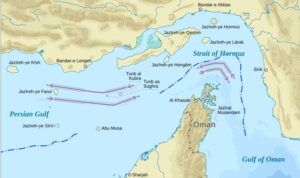
Looking forward over the next five to ten years, the Axis of Resilience is likely to produce five distinct geostrategic shifts that will redraw the security map of Eurasia. First, Russia and Iran will integrate their early-warning radar systems and air defense networks across the Caspian Sea and the Caucasus, creating a contiguous anti-access/area-denial (A2/AD) bubble that complicates any NATO or Israeli aerial campaign against Iranian nuclear sites. Second, a permanent joint naval task force will operate in the Caspian Sea, effectively transforming that inland body of water from an internationally shared basin into a Russo-Iranian lake, marginalizing the naval aspirations of Azerbaijan and Kazakhstan. Third, both nations will expand their military footprint into the northern Indian Ocean, with Russia seeking to revive a logistics facility in Sudan or Eritrea while Iran solidifies its control over islands near the Strait of Hormuz, positioning them to interdict or monitor maritime traffic along one of the world’s most vital energy corridors. Fourth, the proliferation of hypersonic anti-ship missiles and loitering munitions—technologies that Russia can supply and Iran can mass-produce—will render the carrier strike groups of the United States Navy increasingly vulnerable within a two-thousand-kilometer radius of the Iranian coast. Finally, the axis will launch an independent maritime insurance and reinsurance mechanism denominated in rubles and rials, breaking the near-monopoly of London’s Lloyd’s and American underwriters, thereby allowing tankers and cargo vessels trading with Russia and Iran to operate without fear of secondary sanctions. Collectively, these developments point toward a future where the global commons of the sea, once governed by a single hegemonic power, become fragmented into contested zones, each with its own rules, risks, and guardians.
The maritime domain will bear the heaviest burden of this transformation. For eight decades, the freedom of navigation has rested on the uncontested supremacy of the U.S. Navy and the willingness of Western insurers to cover vessels traversing choke points like the Strait of Hormuz, the Bab el-Mandeb, and the Suez Canal. The Axis of Resilience challenges this assumption at its core. Iran, with Russian backing, can now credibly threaten to close the Strait of Hormuz not through grand rhetoric but through asymmetric tactics: deploying swarms of armed drones, naval mines, and anti-ship cruise missiles from prepared positions along the Iranian coast, while Russian electronic warfare ships jam GPS and communications in the strait. Even a temporary closure, lasting only seventy-two hours, would send oil prices soaring past two hundred dollars per barrel and trigger a liquidity crisis in global energy markets. In response, the insurance premiums known as *war risk* loading would increase by five hundred to one thousand percent, making the passage of any tanker flagged to Western nations prohibitively expensive. The logical outcome is a bifurcation of maritime trade: vessels owned by or carrying cargo for China, India, and other non-aligned states may receive favorable rates from the new Russo-Iranian insurance pool, while those tied to the United States, the European Union, or their allies will face prohibitive costs or outright refusal of coverage. This is not piracy; it is the weaponization of financial and logistical instruments to achieve strategic objectives without firing a shot.
Furthermore, the axis will accelerate the search for alternative shipping routes, many of which directly benefit Russia and China. The International North-South Transport Corridor (INSTC), which connects the Gulf region to the Caspian Sea and onward to Northern Europe via Russian railways, will witness a dramatic increase in cargo volumes as shippers seek to avoid Hormuz and Suez altogether. Similarly, the Northern Sea Route along Russia’s Arctic coast, already navigable for longer periods each year due to climate change, will become a priority lane for containerized goods moving between East Asia and Europe, especially for cargo deemed time-sensitive but not temperature-sensitive. Russia’s state-owned nuclear corporation Rosatom already controls the icebreaker fleet and the regulatory framework for the Northern Sea Route; under the Axis of Resilience, Iran may gain observer status or even a formal role in Arctic shipping governance, a region previously dominated by Western powers. Meanwhile, the Suez Canal and the Red Sea will experience a slow but steady decline in traffic, not because of physical closure but because the perceived risk—driven by Houthi attacks originating from Iran and Russian-supplied intelligence—will drive shippers to longer but safer routes. Egypt’s already fragile economy, heavily dependent on canal revenues, could face collapse, while Saudi Arabia’s Vision 2030 plan, which counts on the Red Sea becoming a global logistics hub, will require massive security guarantees that neither Riyadh nor Washington may be able to provide.
No strategic analysis would be complete without acknowledging the axis’s vulnerabilities. Russia’s warm-water fleet remains limited in its ability to project power into the Indian Ocean without relying on third-country bases, and any attempt to transit the Turkish Straits would be subject to Ankara’s approval under the Montreux Convention—a power that President Erdogan has shown a willingness to wield unpredictably. Iran, despite its advances in missile technology, still lacks a credible blue-water navy capable of sustained operations beyond its own coastline; its surface fleet remains small, its destroyers outdated, and its submarines primarily of the coastal type. Moreover, the economic backbone of the axis is strained by sanctions on both countries, and while barter trade and local currency settlements can sustain basic energy-for-technology exchanges, they cannot fund large-scale naval expansion or the construction of new port facilities in distant oceans. The partnership also faces internal political risks: a future Russian leadership seeking reintegration with Europe, or a reformist Iranian government pursuing a grand bargain with the United States, could unravel the alignment. However, given the depth of mutual distrust toward the West and the absence of credible diplomatic offensives from Washington, such reversals remain unlikely in the medium term. The more immediate danger is miscalculation: a small-scale Israeli strike on Iranian nuclear facilities that draws a disproportionate response from Tehran, triggering a cascade of escalatory moves that neither Moscow nor Washington can control. In that scenario, the Axis of Resilience would be tested not as a deterrent but as a liability, forcing Russia to choose between backing a partner on the brink of war or abandoning its most important strategic ally in the Middle East.
For international strategic readers, the takeaway is clear. The world is moving from a unipolar maritime order, enforced by U.S. carrier battle groups and codified in institutions like UNCLOS and the International Maritime Organization, toward a multipolar patchwork of competing zones of control. The Axis of Resilience is not merely a defensive pact; it is an engine of fragmentation, accelerating trends that were already visible in the rise of China’s naval power, the proliferation of anti-access weapons, and the growing skepticism of Western-led financial infrastructures. Countries with significant maritime interests—Indonesia, India, Japan, South Africa, Brazil, and Turkey among them—will need to adopt a “multi-hedging” strategy: maintaining open channels to both the Western-led maritime system and the emerging Russo-Iranian one, while investing in their own national insurance and logistics capabilities to insulate themselves from external coercion. Ports on the Indian Ocean rim, from Chabahar in Iran to Gwadar in Pakistan, from Colombo to Djibouti, will become not just commercial hubs but strategic prizes, contested by rival security architectures. The age of free navigation on the cheap, underwritten by American naval supremacy, is ending. What comes next is an era of calculated risk, fragmented insurance, and maritime geography that once again matters as much as military power. The quiet meeting in St. Petersburg between Putin and Araqchi did not start this era, but it may well be remembered as the moment when the world’s strategists finally realized it had already begun.




Komentar