
Support by SAMUDRA PELAUT TRUST DESA
How crisis response is reshaping regional leadership and green diplomacy in Southeast Asia
The sweeping disasters that struck Indonesia’s Sumatra island at the end of 2025 marked one of the most complex humanitarian emergencies Southeast Asia has faced in years. Affecting Aceh, North Sumatra, and West Sumatra simultaneously, the catastrophe tested the limits of logistics, governance, and coordination in a densely populated developing economy. More importantly, it revealed how disaster response today is not merely an operational challenge—it has become a tool of statecraft, diplomacy, and regional leadership.
Indonesia’s national response was deliberately centralized. Under the coordination of the National Disaster Management Agency (BNPB), supported by the military, police, line ministries, provincial governments, and civil society organizations, the country activated a unified command system to prioritize life-saving action, restore access routes, stabilize displaced communities, and prepare for reconstruction. Critical transportation corridors were reopened using heavy equipment and temporary bridging systems. Air and sea drops ensured food, medical aid, and emergency shelters reached isolated communities. Communication networks were restored through satellite installations to maintain command continuity and public information flows.
Yet beyond operational efficiency, Jakarta adopted a strategic diplomatic posture: accepting global solidarity while maintaining sovereign coordination. All incoming international assistance was channeled through a national integration mechanism managed jointly by BNPB and the Ministry of Foreign Affairs. This ensured that donations were matched directly to verified needs on the ground, preventing redundancy, politicization, or symbolic generosity detached from practical effect. In doing so, Indonesia demonstrated a model for middle-power disaster diplomacy: welcoming international partnership, but asserting the principle that humanitarian effectiveness depends on national command coherence.
The civil-military humanitarian partnership became a defining feature of the response. Indonesian armed forces deployed tens of thousands of personnel for emergency evacuation, access clearance, logistics transport, and engineering works, while civilian agencies safeguarded humanitarian standards, social protection systems, and medical services. This integration illustrated a mature application of “humanitarian statecraft”—balancing the speed and reach of military assets with civilian oversight and rights-based service delivery. For a region increasingly vulnerable to climate shocks, the Sumatra operation provided a potential blueprint for scalable disaster cooperation across the Indo-Pacific.
Crucially, the Indonesian government framed recovery as more than post-disaster reconstruction. Officials explicitly linked rehabilitation to long-term environmental governance reforms: watershed restoration, forest rehabilitation, land-use management, early-warning system expansion, and settlement relocation from high-risk zones. By aligning disaster recovery with climate mitigation and adaptation goals, Indonesia repositioned itself within “green diplomacy.” International donors were not merely invited to contribute emergency funds, but to join structured financing arrangements for climate resilience—transforming humanitarian relief into durable investment partnerships.
This approach strengthened Indonesia’s standing in regional leadership. Working with ASEAN’s AHA Centre and neighboring states, Jakarta moved to reinforce disaster preparedness protocols and cross-border response coordination. The Sumatra experience reinforced the growing understanding within Southeast Asia that humanitarian responsiveness is inseparable from regional stability. Economic growth and geopolitical influence lose credibility when states falter at protecting civilian life in moments of crisis.
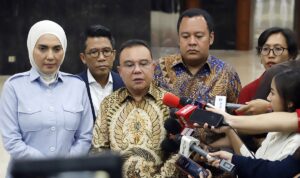
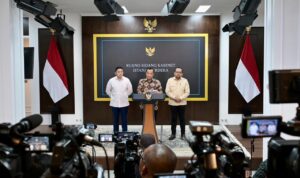
Indonesia’s messaging to the international community remained consistent: solidarity gains legitimacy through coordination, emergency aid must connect to structural reform, and regional leadership flows from demonstrable operational capacity rather than purely diplomatic rhetoric. The government emphasized transparency through routine briefings and data reporting, ensuring media access to verified operational information and reinforcing accountability safeguards during military participation.
In the evolving geopolitics of climate vulnerability, Indonesia’s Sumatra response revealed how disaster management has become a soft-power instrument. States able to mobilize credible humanitarian relief, coordinate foreign assistance effectively, and integrate recovery into climate strategy command moral authority alongside economic and security stature. Jakarta’s performance did not claim perfection—but it showcased how a developing democracy, operating under real-world constraints, could transform catastrophe into a foundation for stronger diplomatic legitimacy and regional influence.
As climate-induced disasters intensify across Asia, the lessons from Sumatra point forward: humanitarian competence will increasingly shape geopolitical leadership. Indonesia, in positioning itself as both a responsive crisis manager and an advocate for sustainable recovery, has demonstrated what modern humanitarian statecraft in Southeast Asia may look like.

Komentar