
Support by PELAUT SAMUDRA TRUST DESA
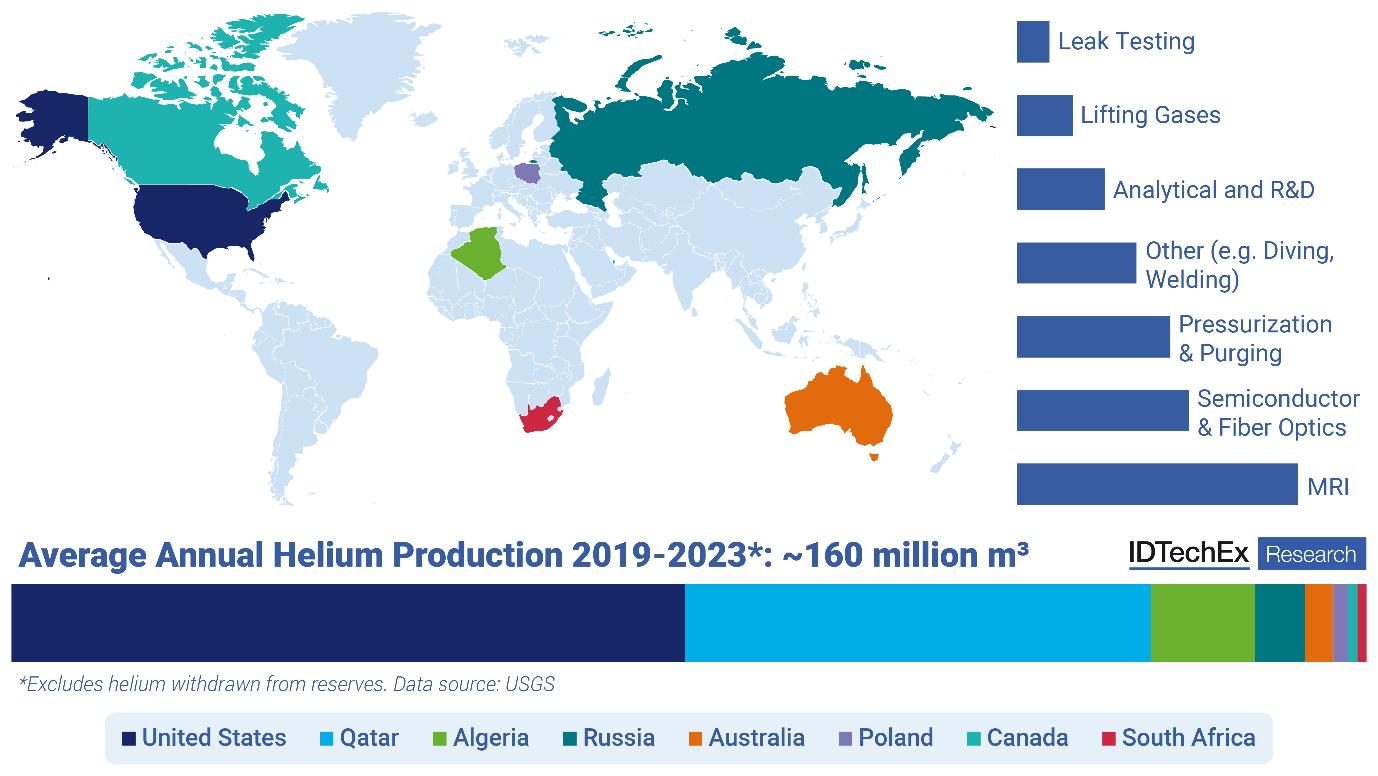
When missiles began crossing the skies above Iran in early 2026, global markets reacted in predictable ways: oil prices surged, insurance premiums for shipping through the Strait of Hormuz spiked, and financial analysts warned of another energy shock similar to previous Middle East crises. But the real disruption emerged from a far less visible commodity. Weeks into the conflict, Qatar — one of the world’s largest helium exporters — quietly halted part of its helium production infrastructure amid escalating regional security threats surrounding the North Field gas complex, and what initially appeared to be an industrial precaution quickly evolved into a global strategic crisis. Within days, helium spot prices surged dramatically, semiconductor manufacturers in Asia reduced production schedules, MRI supply chains tightened across Europe, and several aerospace laboratories delayed cryogenic testing programs. The consequences revealed a deeper truth about the modern global economy: the digital world still depends on extremely fragile physical supply chains.
For decades, geopolitical instability in the Middle East was primarily associated with oil, but the Iran conflict of 2026 may ultimately be remembered for exposing something far more consequential — the strategic vulnerability of critical industrial materials that underpin the global technology ecosystem. Helium, often misunderstood as little more than a gas used for balloons, has become one of the invisible pillars of advanced civilization, essential for semiconductor manufacturing, superconducting magnets, MRI systems, aerospace engineering, fiber optics, nuclear research, quantum computing, and next-generation AI infrastructure. Unlike oil, helium cannot simply be synthesized at industrial scale; commercial helium exists only in rare geological concentrations associated with certain natural gas fields, making the market extraordinarily concentrated. Before the crisis, Qatar accounted for a substantial share of global helium exports, the United States remained a major producer, and Russia controlled growing supply capacity through eastern Siberian gas projects. The Iran war disrupted this delicate balance almost instantly.
According to strategic supply chain analysts, the implications go far beyond commodity markets, as helium shortages directly threaten the infrastructure behind artificial intelligence expansion and advanced chip production. Modern AI systems require hyperscale data centers powered by advanced semiconductors manufactured under ultra-clean industrial conditions, and helium is critical in plasma etching, wafer cooling, leak detection, and cryogenic stabilization during semiconductor fabrication. In other words, without helium, the AI economy slows down physically. This is why the impact was felt first in East Asia, where Taiwan, South Korea, and Japan collectively represent the core of global semiconductor manufacturing and are deeply dependent on uninterrupted access to industrial gases, especially helium. As supply tightened, advanced chip production schedules were adjusted, AI hardware deployment timelines shifted, and concerns emerged over future supply bottlenecks in cloud infrastructure. The crisis exposed the extreme concentration of modern technological production — a conflict thousands of miles away from Silicon Valley suddenly threatened the pace of global AI deployment, and that reality is reshaping how governments think about national security.
For most of the 20th century, energy security revolved around oil, but today strategic competition increasingly centers on “critical materials” — the minerals, gases, and industrial inputs required for digital civilization, including helium, lithium, cobalt, rare earth elements, gallium, germanium, and semiconductor-grade industrial gases. The problem is not simply scarcity but concentration. China dominates rare earth processing and controls significant portions of battery supply chains; the United States leads semiconductor design and AI software ecosystems; Taiwan manufactures the world’s most advanced chips; and the Gulf region remains indispensable for LNG, petrochemicals, and helium. The result is an interconnected system with very few redundancies, where one regional war can now destabilize multiple sectors simultaneously: energy, technology, healthcare, logistics, and advanced manufacturing. This marks the emergence of a new geopolitical era — one defined less by territorial conquest and more by control over industrial ecosystems and strategic supply chains.
Analysts increasingly describe this phenomenon as the “weaponization of supply chains,” where countries are beginning to treat industrial materials the way previous generations treated military alliances or nuclear deterrence. China has already demonstrated this through export restrictions on gallium and germanium, and Western nations responded with semiconductor controls and efforts to relocate manufacturing capacity closer to allied territories. Now the Iran conflict is accelerating another trend: the fragmentation of globalization itself. Rather than relying on hyper-globalized supply chains optimized purely for efficiency, major powers are moving toward what strategic planners call “secure industrial regionalism.” The United States is reshoring semiconductor manufacturing and rebuilding strategic reserves; the European Union is aggressively pursuing critical mineral diversification; Japan and South Korea are expanding resource partnerships across Australia and Southeast Asia. Even Middle Eastern states are repositioning themselves — far from becoming geopolitically irrelevant in the post-oil era, Gulf countries are evolving into strategic nodes within the digital economy itself, sitting at the intersection of energy, industrial gases, logistics, cloud infrastructure, and AI investment. This transformation may redefine the region’s global role for decades.
For countries like Indonesia, the crisis presents both opportunity and warning. Indonesia possesses some of the world’s largest reserves of nickel, bauxite, tin, and copper — all crucial materials for batteries, electrification, and industrial technology — but merely exporting raw materials will not guarantee strategic influence. The new global competition is not simply about resource ownership; it is about control over the full industrial chain: extraction, refining, manufacturing, logistics, and technological integration. Countries that fail to move beyond raw commodity exports risk remaining peripheral players in the emerging industrial order. Ultimately, the Iran war and the helium crisis have exposed an uncomfortable truth about the 21st century: the digital economy is not weightless. Artificial intelligence, quantum computing, electric vehicles, cloud infrastructure, and advanced defense systems all depend on highly physical, geographically concentrated, and geopolitically vulnerable materials. The modern world may appear increasingly virtual, but its foundations remain deeply material, and whoever controls those materials — or secures access to them — may shape the balance of global power in the decades ahead.








Komentar