

Pelaut ADIPATI l Kalitbang INDOMARITIM l CEO TRUST l Presiden SPI l Volunteer INMETA
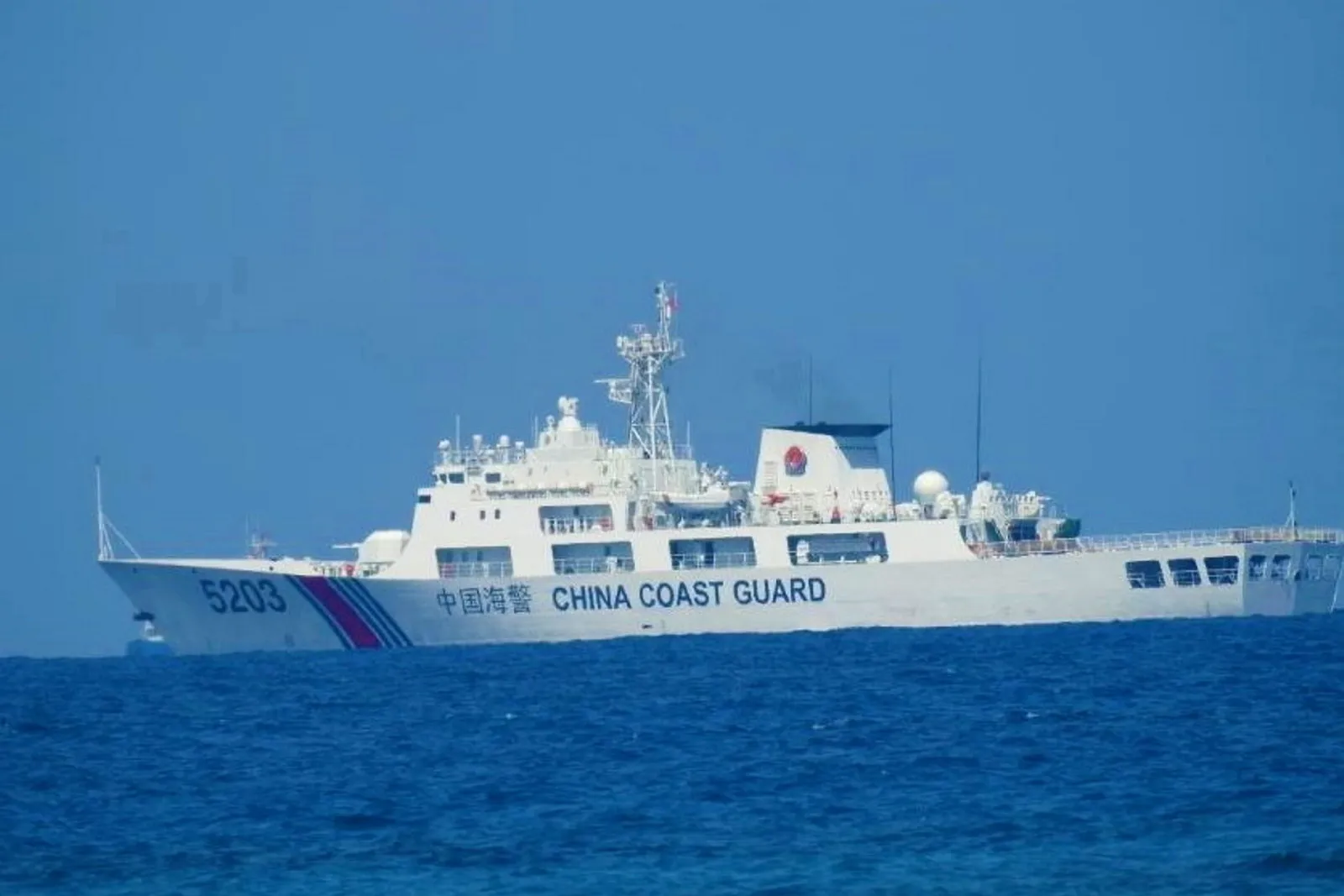
A Chinese coast guard vessel recently re-entered Indonesian waters in the North Natuna Sea for the second time in the same week, sparking renewed tensions. This incident, which took place just days after Prabowo Subianto assumed office as President of Indonesia, poses an early challenge for his administration in safeguarding Indonesia’s maritime sovereignty. The Chinese vessel disrupted an energy survey by Indonesia’s state-owned energy company, Pertamina, within Indonesia’s Exclusive Economic Zone (EEZ) before being expelled by the Indonesian Maritime Security Agency (Bakamla).
The North Natuna Sea, a strategic and resource-rich area, has often become a flashpoint due to overlapping claims with China. Alongside other Southeast Asian countries like Malaysia, the Philippines, Brunei, and Vietnam, Indonesia faces challenges from China’s expansive claims over the South China Sea, which is based on the so-called “nine-dash line.” This claim extends into parts of these countries’ EEZs. While the Permanent Court of Arbitration in The Hague ruled in 2016 that China’s claims had no basis in international law, China continues to assert sovereignty over the region.
Ongoing Conflict in the South China Sea
The South China Sea is one of Asia’s most contentious hotspots, given its strategic position as a primary global trade route. Approximately 37% of the world’s crude oil passes through these waters, making it an economically vital and contested zone. Additionally, the South China Sea holds substantial natural resources, such as oil and natural gas, which are economically crucial for surrounding countries, including China, the Philippines, Malaysia, Vietnam, and Brunei. Each country has overlapping claims, often leading to diplomatic tensions and occasional military incidents.
To reinforce its claims, China deploys its coast guard and maritime fleet, which frequently exhibit aggressive behavior toward both military patrols and fishing vessels from other claimant countries. China argues that these coast guard activities are legitimate measures to prevent territorial encroachment in waters it considers its own. However, ASEAN nations view these actions as a threat to their sovereign rights over energy exploration and fishing activities.
Diplomatic Agreements and Efforts in the South China Sea
The conflict in the South China Sea has prompted several diplomatic efforts to achieve a peaceful resolution. One notable agreement is the Declaration on the Conduct of Parties in the South China Sea between China and ASEAN countries, signed in 2002. Although this declaration is non-binding, it aims to ease tensions by encouraging dialogue, transparency, and cooperation in resource exploration. In 2017, China and ASEAN began negotiating a Code of Conduct in the South China Sea, but so far, discussions have not produced a binding agreement.
As United Nations members, Indonesia and other countries involved in the South China Sea dispute are bound by the United Nations Convention on the Law of the Sea (UNCLOS) of 1982. UNCLOS governs maritime rights, including territorial boundaries, EEZs, and rights over resources. The 2016 ruling by the Permanent Court of Arbitration rejecting China’s nine-dash line claim was part of broader efforts to uphold UNCLOS. However, China has refused to accept the ruling and continues its efforts to expand its influence in the region.
Diplomatic and Defense Challenges for Prabowo’s Administration
For President Prabowo Subianto, this incident underscores the importance of safeguarding Indonesia’s maritime sovereignty and energy security, particularly in the resource-rich North Natuna Sea. As a new leader, Prabowo faces the challenge of balancing a non-aligned foreign policy with the need to strengthen strategic alliances amid rising tensions in the South China Sea.
Prabowo may need to bolster maritime defense in the North Natuna region, intensifying sea and air patrols with the support of Bakamla and the Indonesian Navy, as well as using drone technology and unmanned aerial vehicles. This new administration’s commitment highlights Indonesia’s readiness to defend its maritime sovereignty. However, Prabowo also faces a substantial diplomatic challenge, especially in maintaining effective relations with China, one of Indonesia’s largest trading partners. His planned visit to Beijing is anticipated to open channels for dialogue on maritime issues between Indonesia and China.
Striking a Balance Between Diplomacy and Defense
By intensifying patrols and conducting joint military exercises with regional partners, such as the United States and Japan, Indonesia signals its commitment to remain neutral yet resolute in defending its national interests. Prabowo is expected to navigate diplomacy carefully to maintain positive relations with China without compromising Indonesia’s sovereignty. However, if tensions in the North Natuna Sea persist, Indonesia may need to adjust its defense strategy and strengthen cooperation with ASEAN countries and other strategic partners to ensure regional stability and security.
Future Prospects for the South China Sea
Resolving the South China Sea conflict remains a complex task, given the numerous stakeholders and significant economic interests in the area. Under Prabowo’s leadership, Indonesia is determined to uphold its sovereignty within its EEZ. By enhancing regional cooperation through ASEAN and bolstering surveillance in its maritime areas, Indonesia aims to maintain security in the South China Sea and create a peaceful, stable future for all parties involved.
Indonesia’s Foreign Minister Sugiono’s recent participation in the BRICS summit, representing the Global South, underscores the nation’s commitment to a non-aligned foreign policy in the region, particularly in the South China Sea, where China asserts comprehensive claims. In alignment with BRICS declarations calling for a stronger World Trade Organization to resolve trade disputes and an expanded UN Security Council for broader developing country representation, Indonesia is actively engaging in strategic diplomacy.
Regional organizations such as the African Union and the Shanghai Cooperation Organization (SCO) have been effective in fostering economic, security, and cultural cooperation among member states. Leveraging Prabowo’s close relationships with Malaysia’s Prime Minister and the Sultan of Brunei, a potential wave of influence extending beyond ASEAN may emerge to establish a strategic compromise in the North Natuna Sea, enhancing regional stability.








Komentar