
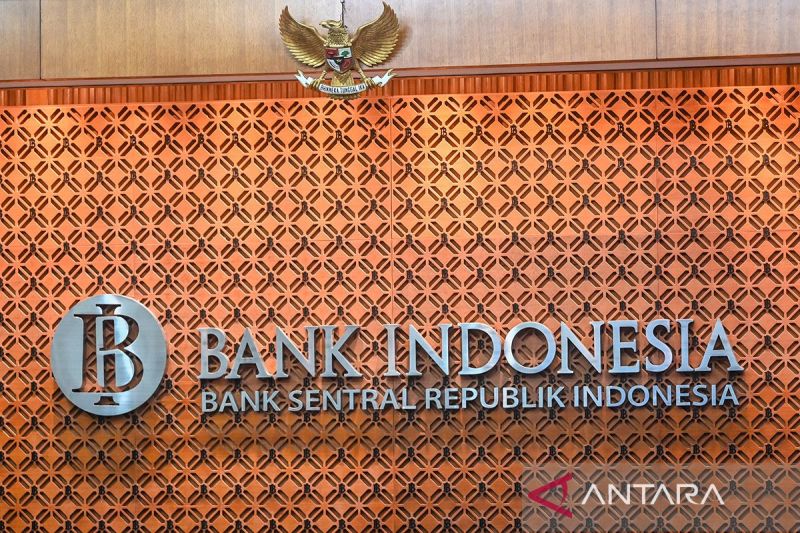
Jakarta, indomaritim.com – Bank Indonesia (BI) has ramped up its market interventions to defend the rupiah after the currency breached a historic critical threshold, tumbling to around Rp18,000 per US dollar as of Thursday.
The aggressive move comes as the Indonesian currency is challenged by escalating Middle East tensions, high global energy prices and seasonal surge in domestic corporate demand for foreign currency, according to BI Senior Deputy Governor Destry Damayanti.
“Bank Indonesia continues to be present in the market and is increasing the intensity of its interventions to ensure that market mechanisms operate smoothly and the stability of the rupiah exchange rate is maintained,” Damayanti said in her statement on Thursday.
According to Antara News Agency, to anchor the currency, BI is restructuring interest rates on its monetary instruments to offer more competitive yields, aiming to lure foreign portfolio capital back into domestic assets.
The central bank’s ongoing intervention strategy is being executed consistently across multiple fronts. This includes Non-Deliverable Forward (NDF) transactions in offshore markets, direct spot transactions and Domestic Non-Deliverable Forward (DNDF) transactions within the domestic market.
Furthermore, BI is actively purchasing Government Securities (SBN) in the secondary market to anchor bond yields.
The rupiah’s sharp slide – amounting to a -7.44 percent depreciation year-to-date – mirrors a broader sell-off across emerging Asian markets.
Damayanti attributes the weakness primarily to geopolitical friction in the Middle East, which has disrupted peace prospects and kept global crude oil prices high. For Indonesia, elevated energy costs have stoked fears of global inflation and triggered rapid capital flight toward safe-haven assets.
On the domestic front, a seasonal surge in foreign exchange demand has added to the pressure, driven primarily by multinational corporations repatriating dividends and local entities processing foreign debt payments.
Despite the recent downward pressure, Damayanti reassured the public and market players that Indonesia’s financial defenses remain robust with foreign exchange reserves stood at a stable US$146.2 billion at the end of April.
As a long-term buffer against the volatility of the US dollar, BI continues to aggressively promote its Local Currency Transaction (LCT) framework for cross-border trade.
To date, Indonesia has established bilateral LCT partnerships with key trading partners, including China, Japan, Malaysia, Thailand, South Korea and the United Arab Emirates.
“The diversification of trade transactions through the LCT scheme continued to increase in April, reaching around US$22.7 billion, compared to US$25.7 billion recorded for the entirely of the previous fiscal year,” Damayanti revealed. (RR)












Komentar